Monday, 27 August 2012

Hitting the Wall pt. 2: The Door to Second Year

Last Monday was supposed to be my "official" return to university life after my holiday.  I'd had a lovely break, we went to the Isle of Mull where it was sunny every day all day and we had a brilliant time.  Will and I even got engaged!  (Woop!!)  With my lit. review behind me and all this happiness buoying me up, I was ready to go.

Then I actually got back to uni.  I had my TMC and because I'm not a complete n00b anymore, I had to answer tougher questions than last time, which I was unprepared for.  I got my feedback on my lit. review (which was pretty good by the way - very pleased!) and got home that day feeling absolutely exhausted and a bit deflated.  Somehow, all my enthusiasm had slithered away to be replaced by an illogical feeling of inadequacy.

I had hit the wall.  Again.

At first, I didn't recognise the symptoms.  Although I had been caught a little unawares in my TMC, it was all very constructive and I had solid directions in which to proceed.  I'd had positive feedback on my lit. review.  I had no idea what was causing me to feel so negative about my PhD.  Every time I sat down to work on my corrections on the review, or decided I should head into the office, my brain threw a tantrum like the proverbial two-year-old.  I didn't even want to think about it!

I'll clarify now that I still don't know what triggered the experience.  So apart from that Monday back, I hadn't done anything PhD related all week.  It's a confusing and bewildering position to be in, when you're almost observing yourself externally, seeing the emotional response to the PhD without really understanding why it's happening.  I'm a logical, rational person (most of the time), and it just didn't make sense.

Over the weekend, I decided I needed to come up with a plan.  (I like those).  Logical or not, I was struggling to get back to work.  While a few days were acceptable, I couldn't continue wallowing and avoiding my PhD like the plague.  So, I decided that if my brain was going to act like a two year old, I was going to treat it like one.  I allowed myself a lie in today, on the proviso that once I was awake, I had a shower, got ready and went straight to uni.  It's not a full day's work, but it's some work, which is an improvement on none.  My reward for completing a few hours work today is an unadulterated evening of relaxing doing whatever I want.

Like I said, I'm keeping it simple.  Behaviour + reward = positive reinforcement.  I'm not a psychologist for nothing ;-)

On reflection though, this weekend I also realised that while there might not have been a specific trigger for my unwillingness, I did realise there could be a broader problem: fear.  While I haven't fully completed my conversion yet - that won't be done until I complete my talk for the School in October - I am now considered to be a second year.  Now, I'm not sure how true these will hold, but from what I've heard and read from other peoples' experiences, my impressions of second year weren't good.  I'd been told right from the start by so many people I'd lost count: "Second year is going to be shit."  

Oh.

I can see why - you're no longer a first year, which in turn means you are (a) expected to know your shit, (b) be role models/support for the new intake of PhD students and (c) no longer able to excuse ignorance.  There are similar transitional points between seniour years of your undergraduate degree, but those are marked by a long three-and-a-half month break to acclimatise.  I had a couple of weeks.  It's hard to make that switch and feel prepared for these new expectations.

It's not just other peoples' expectations that were getting to me though, it was my own too.  I think that the majority of people who are doing PhDs are over-achievers.  This is not a criticism - hey, I'm one too! - just an observation.  But this also means we expect a lot from ourselves.  I wanted to be two studies down by now with more underway and a couple of chapters drafted out.  Obviously, I didn't manage that.  But this feeling of being behind and not meeting expectations is still there.

When you look at it in black and white, the fear is a pretty obvious response.  Realistically, I can manage, but not completely change the high expectations I have of myself.  What I can change though is how I hold myself to them.  I think the key is being positive rather than negative.  Just like I wouldn't berate a student who was struggling to understand, I shouldn't berate myself.  Hence my plan of gentle coaxing.

Second year is scary because you're all grown up now.  However, you're still a student, and no one expects you to be producing work that is the equal of your supervisors, or even equal to the standard your own work will be in six months, or a year.  

So my suggestion to you, if you hit the wall of Second Year Fear, is to creep along it until you find the door.  Coax yourself through.  Be nice.  Take your time.  And remember: you got this.

I'll see you on the other side.

Thursday, 2 August 2012

10 Things I Learned About Doing a Lit. Review

I am delighted to say I have now finished and submitted my literature review.  If you've read any of my previous posts on the topic, you'll have noticed it has been a bit of whirlwind of emotions, stress and procrastination.  

However, I learned a lot from the process and thought I would sum up the experience with the ten most important things I've learned whilst working on my lit. review.  

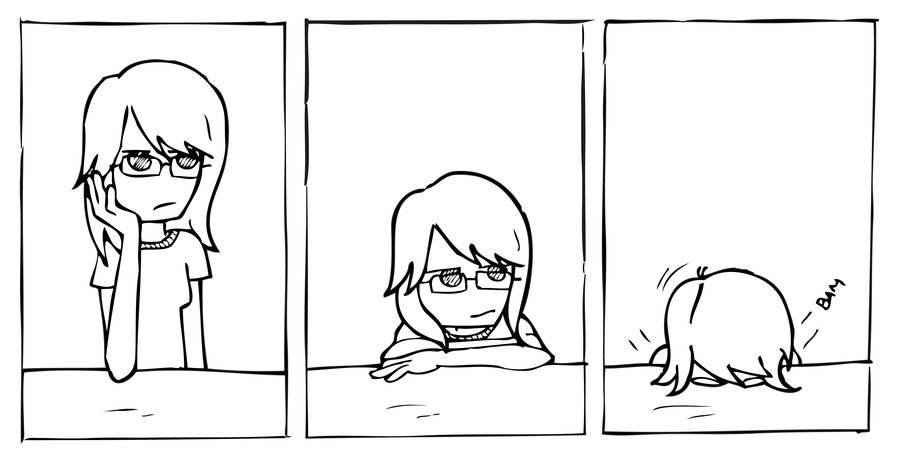
And if you're wondering about the picture, this is what I'm doing now it's finished!

1.  Make plans with the intention of scrapping them.

On a CPD course I once got told that the act of making a plan isn't really to set out how and when we're going to work, instead, it's a mental exercise that allows us to get our head around what's actually involved.  Writing a lit. review, for example, isn't just about writing 7,000-10,000 words.  It's about reading, finding a story, figuring out how that's all going to come together, writing and finally editing.

I made about twelve different plans throughout my lit. review, and the finished product looks vastly different from the first five or so.  From then on, they come closer and closer to what the final version was about.


2.  Allow way more time than you think you'll need.

Since my last experiment went belly up, the literature review was all I had to work on this summer.  For that reason, I thought "Hey, no problem, I'll get that done in a few weeks!"  No.  Just no.  What was originally scheduled for submission on the 1st of July, became the 14th, then the 27th, then the 3rd of August.  I actually got it submitted on the 30th of July, so a little in between my final two estimates.

This is not because I am necessarily lazy.  The process was a lot more difficult than I'd anticipated, but we were also ripping out our kitchen and building a new one at this time.  Like my lit. review, this also took a lot longer than intended and was a lot more stressful, so it took away from time I might have dedicated to writing.


3.  Don't be afraid to let your thinking evolve.

I used to be what gaming people call a completionist.  I hated putting down a game if I hadn't earned every achievement, levelled up all my characters to 100, collected all the secret items and had explored every little corner.  Apply that logic to writing my lit. review, and it meant I really didn't want to give up on that first plan I'd made.

This is a really important lesson for the PhD as a whole, not just writing lit. reviews.  You must learn to be flexible.  The thing is, my first plan was pretty dull.  As I read more and learned more I found a more exciting path I wanted my research to go in.  My thinking and my writing had to adapt to keep up, and the final version is much more interesting because it has been around a topic I am passionate about.


4.  Don't be afraid to say "NO!"

This might be specific only for those who have a close family.  My family love me and are invested in me and my future, so they like to know how it's going.  They also knew that the lit. review was important.  But when every phone call or Facebook conversation asks how it's going, how much you've done and if you're going to finish on time, it can be stressful, even when you know they're only asking because they care.  Sometimes you just have to say "I'm not discussing it", even when you know it's rude, to preserve your sanity.


5.  Read it aloud.

I've always done this to check work.  I find reading aloud helps me find those minor errors (a where instead of a were, or a missed word or phrase that Word doesn't flag up) that when reading internally, we often skip over.  Reading aloud means these errors trip you up.  It also helps you figure out if sentences are too long, if they don't run well together, or if something is complicated.  If you're out of breath, the sentence is too long.


6.  Take a day off before editing.

By the time I had my final draft complete, I was sick of the sight of my literature review, and my laptop.  I wanted to kill it with fire and never look at it ever again.  Obviously, that's not an option.  However, I knew if I went straight into editing, my judgement would be clouded.  I'd skip over bits because I'd read over them what felt like a hundred times trying to get the wording right.  

Taking a day off gives you a reprieve.  I slept in and didn't use my computer or check emails or Facebook or anything for a day.  I went outside for a walk, I watched a couple of films, I sewed, I cleaned and I had an early night.  Coming back to edit after that was much easier.  Rather than feeling like a final slog, it was a a look back over what I'd done with fresh eyes and a recharged brain.  


7.  If it's not working, go back to basics.

My last post was written at a time when the writing was at its hardest.  I was stressed out and tearful all the time, exhausted with writing a project that just wouldn't go together.  Imagine you've one piece left for a jigsaw, but it just won't fit in - it's completely the wrong shape.  That's what it felt like.

So not long after that post, I decided to go back to the beginning.  I wrote the question at the top of a page, and drew the sections I thought would answer that question off it in spider-diagram form.  I then reordered those sections in the most sensible fashion.  Everything made sense.  I'd been struggling so much because I'd been trying to answer a newer, more evolved question, with an older plan.  The older plan no longer made sense to the newer question, hence my difficulty in getting things to fit together.  Once I'd figured out where I'd gone wrong, the words flew out and I wrote my final draft in about six days.  (Before editing of course!)


8.  Make sure you're doing something else too.  As long as it's not building a kitchen.

Part of my frustration with my lit. review was that I felt like I did nothing else.  My pilot had gone wrong so there was no more work to do for that, and I couldn't start my next study until September when the undergrads came back for Autumn term.  It ended up that all I felt like I was doing was my lit. review so I began to despise it because I felt it was taking over my life.

This led to a secondary problem, in that having only one project meant I kept procrastinating.  It was easy to say "I'll do it tomorrow" when I only had one thing to do.  Bad idea.


9.  Think carefully about advice.

If you're stuck and ask for advice, that's great.  It's important to feel comfortable enough to do that.  If you're asking people you trust who've been through this, even better.  But you will be given a lot of contradictory, unsolicited advice too.  Again, these people are only trying to be helpful and it is not the fact that they're giving advice which I'm cautioning against.  All I am saying is to think for yourself before you act on it.  Everyone works differently, and what they did might not work for you.  It can also be a bit stressful (like the "How's it going?" question), so don't feel bad if you just want to nod and politely say thank you, but not follow it.


10.  Have faith in yourself.

By the time you come to write your literature review, you'll have been doing your PhD for about a year.  You're going to feel totally out of your depth and like you know nothing.  You know more than you think you do.  Remember always that this process isn't just about progressing into second year, it's a chance for you to get familiar with the literature in your area, so you can rattle off "Oh yeah, like the Fletcher-Watson et al. paper on people preference" and have other people look at you and be impressed.

Yeah.

But seriously, if you got onto the PhD programme, you can do this.  Take your time.  Allow yourself days off if it's just not coming, but always remember you got this.  I have come out the other side of my lit. review more prepared to face the rest of my research, but also much more confident in arguing my case.  I know what I'm talking about.  These months of work have allowed time for osmosis to happen and finally, I know the key studies important to my research like I know the words to Flower of Scotland. (And that's well, by the way.  I could sing that in my sleep).

If I can do it, you can.  And if you're facing the prospect of a lit. review, or are writing one just now, I hope this might be helpful for you.  But the most important point is the last one.  If you take nothing else away from this, just remember: you got this.

Monday, 16 July 2012

The Quagmire of the PhD

When I started this blog, I wrote that it was a tool for me to be reflective about my journey through my PhD, but also to offer an 'insider's guide', if you will, to all aspects of being a PhD student.  I regret to say that today's post highlights some of the more turbulent experiences of - what I hope is - a typical PhD student nearing the end of their first year.

As I'm sure most PhD students experienced, I began my PhD with bountiful enthusiasm.  I could cope with hours upon hours of reading because I was interested.  I wrote lots of notes, I colour coded lots of things, I organised my office and labelled folders and collected journal articles like they were going out of fashion.  I approached potential studies like an over-excited puppy, reading everything, writing ethics forms, and all the while thinking how great it was to be learning.

I miss old me.

New me hates everything.  I should add a little caveat here, in that I still wouldn't want to be doing anything else.  But that doesn't mean I don't hate it.  I hate the never-ending "How's the PhD going?", or "Have you finished your literature review yet?".  Worse still are the "You really need to get working on that you know", the "You better not be thinking of quitting" or the "Why aren't you published yet?"

The rational part of me knows people not asking these questions or making these statements from a negative standpoint.  They are are asking (a) because they care or (b) because they think it is a safe topic, much like "How is work?", except it's not like that at all.

Every day, I struggle to get in front of the computer.  If I do, I invariably stare for hours at a blank document or reread what I've already written without making any new progress.  I despise the topic, the literature and my own poor writing.  Avoidance, although temporarily relieving, perpetuates the guilt cycle.  

I don't work - I feel guilty - I try to work - I fail miserably - I hate everything - I don't work.  I think we can agree, it's not the most productive of cycles.

Funnily enough, I was warned by everyone who had been doing their PhD for more than 12 months to expect this.  All have good advice - advice I've returned on the odd occasion - and while I know how good it is, I just can't seem to follow it.  I took a few days away from it all, in the hopes I'd break the cycle, but as we're currently refitting our kitchen in our tiny one-bedroom flat, it wasn't really days off to relax.  It was days off to work 8-16 hours on a kitchen I am also rapidly growing to hate.  (That's a rant for a whole other day though).  I came into the office today to get out of that environment, but here I sit writing this post, rather than my literature review, the deadline for which is approaching at break-neck, terrifying speed.

I imagine this is what it must feel like for the proverbial deer in the headlights.  I see my deadline racing towards me, flashing warning signs all through my diary and calender that the end is near, but I am paralysed by fear and inability to do anything so it sits, with 4250 words completed (many of which will need rewritten) and I am writing blog posts.

Those of you who have been here I'm sure can commiserate.  For those of you who haven't yet, I hope I am not diluting your enthusiasm.  But these are the realities of the PhD, I suppose.  I hope that soon I might be able to write about overcoming this, but for now, I am all Bambi-like and unable to write anything related to my topic.  Or even talk about it.  

Just don't ask me how my PhD's going.

Monday, 18 June 2012

Literature Review III: Choppy Writing


I'm considering myself well into the writing mode now and am close to halfway towards my word limit (which has been revised to 8,000-9,000 at most now).  As I've said before, this is my first real piece of academic writing since my undergraduate days, and I've noticed that I've approached this project in a completely different way.

One of the main obstacles for me has been the lack of a solid question. Obviously, I have a question I am trying to answer within the review, but I'm talking about the smaller sort of sub-questions that shape the direction and style of your argument.  For example, when I am writing about magic, I want to establish the value of magic research in science, as well as discussing the work that has informed my own research.  The former is quite a broad topic, where the latter is much more specific, yet these are to be covered within one large section about magic. 

If we continue with this example, my problem has been how to make the progression between each subsection within the magic area.  This has resulted in what I've called "Choppy Writing".  I go from one section to another, writing a few sentences or paragraphs as I come across something I think will link into that section, or as I read a paper and see that what I've written might be better placed elsewhere, and so on.

I don't suppose this in itself is inherently problematic (although I can see me having to do crazy proof-reading to make sure I've still got all the references that are in my reference list) but it does feel strange for me to write in this way.  I've mentioned before I like to write a section in its entirety before I move on, or at least - I used to.  This time, the choppy writing has come to me naturally; it seemed the most intuitive way to approach the topic.  Write what I could when I could, so that something is down on paper.  I suppose that's what drafts are for - editing is where I need to shape it up and refine the ideas and arguments.

The draft itself still feels very rough and I'm not sure how good anything I'm producing is, but at least I'm at the point now where I am going to send one completed subsection to my supervisor.  The prospect terrifies me, but I think it is okay, so I need to see where my judgements of the work stand in relation to my supervisor's.  We shall soon see!

Monday, 4 June 2012

Lit. Review Part 2: Once more unto the breach

It's been two weeks that I've been "writing" my literature review.  Two weeks, and I have produced 1,590 words.  

In reality, I've probably written closer to 6,500 words, but I've deleted them all.  I rewrote and rewrote and rewrote and ended up having written nothing.

Herein lies my first big mistake.  Stop rewriting!

If you consult a 'how-to' book about writing novels, it will tell you to get that first draft down on paper regardless of crappy spelling, poorly developed plot-lines and weak characterisation.  I have read one or two of these books in my time, but didn't think to apply it to my literature review.  So instead, I got hung up on each sentence.

.
You can understand why - it's an important piece of work.  Important people read it.  If I hand in something... less than excellent it makes me feel I am damaging my future reputation and credentials as an academic.  But, please, learn from my lesson.  This approach leads to writing less than 1,000 words a week.  Bad Katy.

The second thing I have learned so far is that you don't always have to start at the beginning and end at the end.  My literature review has two (possibly three) main sections.  I started with the first section because it was first.  It was also the hardest and the one that might get incorporated into the other sections.  Now, it took me ten whole days to realise: this was a dumb idea.  All through my undergraduate, we wrote experimental reports.  I always wrote the methods and results first, then discussion and lastly introduction and abstract.  Obviously, that's not it order.  I can't tell you how much of an idiot I felt when I realised I should apply the same principles to writing a literature review.

Duh.

So, in the last three days or so, I've been writing the section about magic, which has been good for two reasons.  First of all, it means I'm actually writing something.  This is an area I know better and am more enthusiastic about so the words come more easily.  That has a knock-on secondary effect - I don't feel like such an idiot.  I probably don't need to elaborate on why that's a good thing!

I feel like I haven't progressed much yet.  It's like Literature Review and I are in a state of war.  We occassionally give each other peace for sleep and so on, but even that's disrupted by random thoughts and dreams that I'm writing.  Daily activities bombed by guilt "You should be writing!" and tired-brain "Stop making me do this!  I give up!  I surrender!"  However, I am regrouping and reinforcing my defenses.  I wade once more unto the breach.  And hopefully, next time, I can tell you "We are in the final stages of war.  We shall be victorious!"

Monday, 21 May 2012

The Literature Review - Part One

As with many universities, at my School, your first year as a PhD student is sort of like probation.  You get a chance to learn the ropes (or to try, anyway), to start figuring out what your question is and to generally feel overwhelmed by what you've signed up for.  

However, as probation starts to draw to a close, you remember that little paragraph somewhere in the postgraduate student handbook you read months ago, that you have to submit a piece of work to be judged as an assessment on whether you should become a fully-fledged, official PhD student.


Uh oh.  Frantically, you race back to the handbook, scroll through endless amounts of information to reach that paragraph and confirm - it says you've got a lot of work to do!  

That's the point I'm at.  I have my first proper piece of work to do (MSc module assignments aside).  For the 27th of July, I must write an 8000-10,000 word literature review on my topic.  Gulp!  For those of you further on in your PhDs, you are probably reading this and shaking your head with the memories of your first "big" piece of work and thinking to yourselves 'Oh just wait for what's to come.'  I realise that I'm probably going to cross this threshold soon and that in 6-9 months, writing a lit. review will seem like nothing.

Right now, though, it seems huge.  Which is why I thought it'd be helpful to write a short series of posts as I go through the process to illuminate it for anyone (a) thinking about doing a PhD so you can be forewarned, or (b) also going through this so you can commiserate too.

Now, I didn't do a Masters, so my last piece of academic writing was my undergraduate dissertation in my fourth year.  It was 7,500 words, so not too uncomparable in length, but the difference was it didn't really matter what you said.  Of course, you had to make sense, present your argument in a logical way, etc., but it didn't matter if your experiment was unsuccessful or if you hadn't fully grasped all the relevant concepts.  I think we all know that your literature review for your thesis, on the other hand, is a very different story.

So take my nervousness about writing academically, my awareness of how important it is - which leads to a sense of terror - and add in the fact that I have no idea how to write a literature review.  The latter, I feel, is likely to be my biggest hurdle.  I mean, I'd heard the term before, but what is a literature review when you get down to it?

At the moment, my understanding is that it is a way for you to present an argument for your research topic and demonstrate its grounding in relavent literature.  Ok, great.  I have an OED definition.  But how the hell do I go about writing one? 

My current plan is planning.  I've got a basic plan of progression (subheadings with bullet points illustrating what I might talk about), so I can begin to form an idea of how to tell the story, as it were.  I'm actually meeting with my supervisor today to discuss it, so I can either be given the go ahead, or be told to have another think about it.  It's daunting to consider 10,000 words at once, so instead, I'm trying to think of each individual section as a mini essay.  I have three subheadings to work with, each with their own subtitles, so I have the bare-bones framework for a very rough first draft.

The second hurdle is the fear.  I am finding it hard to persuade my fingers to commit anything to paper.  In fact, that's part of my reason for writing this - I figure the more I encourage myself to write, the more my brain will be in a "writing" mode.  My concerns about this are almost evenly divided into the rational and irrational.  I'm concerned it wont be good enough, and I wont be allowed to progress in my PhD.  This is a rational fear, I feel, as it would rather affect my life plan.  But other fears, like "I can't write anything!" I know are unfounded.  I have, after all, just written a rather long blog post about the whole topic.  

I don't imagine this being an easy task, but I hope that by taking semi-regular breaks to tell you all about it will help me take an objective perspective on it all once in a while.  This will hopefully help me retain my sanity, and remember that, in the grand scheme of things, there's only another 90,000-92,000 words to go.  

Eek.

Monday, 7 May 2012

The First Big Blow


In the last week, I've had the first big blow to my PhD confidence.  My first study, which has been my focus up until now, was finally at the analysis stage.  The pilot had been run, the follow up concluded and hours upon hours upon hours of coding finally finished.  It was time for analysis.

It turns out, I have nothing.  No results.  Nothing I can use.  It's not just an absence of what we thought would happen.  Every single participant did a different thing, which means I can't even say "Well they didn't do x, but they did y!"  I can do nothing with it.  I'm not going to lie.  This was one of the toughest things I've ever had to overcome.  With real-world vision research, you can't just run another few participants.  Coding takes so long per person that it's unfeasable if the pilot shows no pattern.

Obviously, this is hard because it is my first study and it has gone wrong.  But it's also hard because it is a reinforcement of fears like 'I'm too far behind everyone else', 'I'm never going to complete on time' and 'Am I really good enough to be doing a PhD?'  I'm sure these are fears everyone faces and I know failure is not individual to me or my research.  I knew this was something I needed to anticipate, I just didn't expect it so soon.

It's also difficult because in my School, we have to complete a piece of work in our first year that is our assessment to be allowed to continue.  My work had been going to be a write up of this study, so I'd been working on it for a while already.  However, now I will need to do a literature review instead.  This is scary, because I would've been preparing a long time ago if I knew that, and I am not confident about my writing.

However, I'm trying to see the bright side in all this.  After several days of allowing myself to mope that is.  At least this has happened now, rather than my second or third year when I'd be even more stressed.  And at least it was not a huge study.  It's going to give me practice at writing. 

I'm not quite believing these positives yet, but I'm working on it.  It's all still a bit raw.  But hey - if I can get through this, I guess I can get through anything.